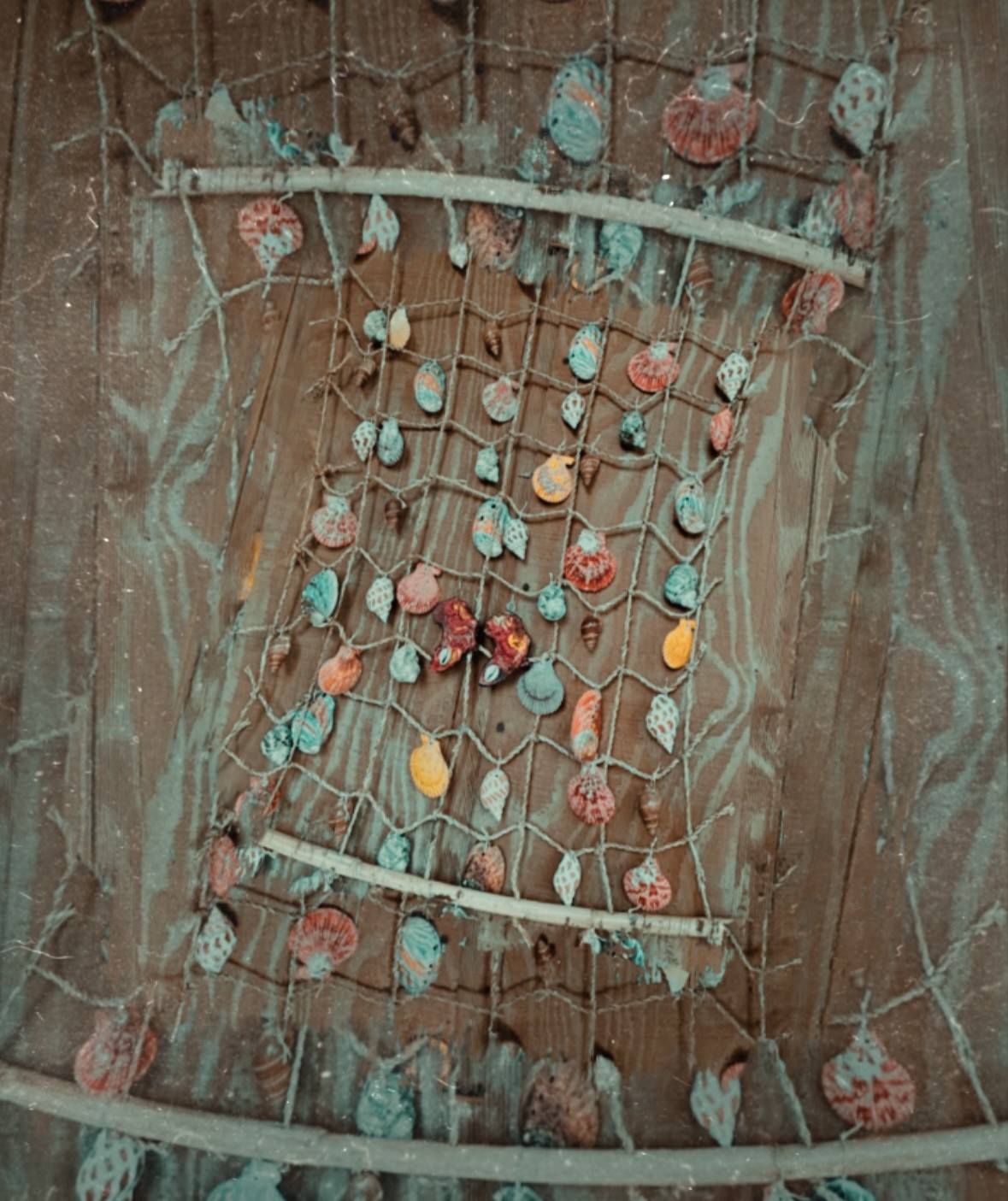
Just an image I captured at home that reminds me of that moment.
I’ll admit, when my coworker first introduced me to ChatGPT, I didn’t think much of it. I figured it was just another tech tool that probably wouldn’t be all that useful in my day-to-day life.
But I decided to test it out anyway. I uploaded a picture of my primary care physician list — over 400 names — and asked ChatGPT some very specific questions about ethics, humanity, gender, and overall safety in medical practice. As a woman of Afrikan descent, I’ve had my share of abrasive and, at times, outright racist experiences in healthcare. So this search wasn’t just about convenience; it was about trust, dignity, and finding someone who would actually see me.
To my surprise (and a little concern), out of more than 400 providers, only six met the criteria I was looking for. Six. You’d think things like empathy, integrity, and inclusivity would be universal — but they clearly aren’t. And to make matters worse, five of those six either weren’t accepting new patients or had wait times stretching into February 2026. Yikes.
Still, I had one name left — and I’m so glad I followed through.
My new doctor was born in America to Indian parents. From the moment she walked into the room, there was an ease about her — an openness that felt rare. She greeted me with genuine warmth and said, “I’m so happy to be your doctor.” Throughout the appointment, she was kind, attentive, and present in a way that made me feel completely at ease.
Then came a moment that made me laugh and love her even more. In the middle of our chat, she suddenly stopped, chuckled, and said, “Oh my gosh, I think I might have something in my nose!” She laughed as she reached for a tissue, saying, “I normally wouldn’t say that to a patient, but I feel like I can say that to you.” I told her, “Oh, I totally would tell you!” When she came back from washing her hands, I looked her in the nose and said, “All clear — nothing there.” Her smile lit up the room.
She also apologized at one point for wearing her gardening tennis shoes. She told me she’d gotten dressed for the day, went out to tidy up her garden, and completely forgot to change shoes before heading in. We both laughed — it just made her even more real.
That small collection of moments — laughter, honesty, comfort — reminded me what healthcare should feel like. Human. Down-to-earth. Safe. There was something quietly beautiful about our connection — two women of color, from different cultures, sharing a simple, authentic moment in a space that so often feels sterile and guarded.
I can’t say I’ll use ChatGPT for much else, but for this — for helping me find a doctor who respects and understands me — it was invaluable. What started as a test turned into something deeply meaningful.
Sometimes, technology gets it right — not by replacing humanity, but by helping us find it.
I remember one of the first times someone denied my humanity. It was cruel — a bold-faced lie, told by an adult who had been newly welcomed into my family.
He lied. And someone I trusted — someone who should have protected me — believed him over me. Got me in deep shit.
And I remember how it felt. Like being attacked. Like I needed to defend myself, add context, explain. But nothing worked.
Because his lie controlled the scene. His lying ass watched me bleed for something he had done, and we both witnessed it with our own eyes — but lies told with confidence often win. For a while.
Power can dress itself in lies and still be welcomed, while the truth — especially from a young, trembling voice — can be discarded like it never mattered.
That moment didn’t just hurt — it carved something out of me.
It taught me two things I wish I never had to learn: That denying someone’s humanity is one of the worst things you can do to a person. And that being human does not guarantee being treated human — especially when someone decides you aren’t worth the dignity that makes being alive sacred.
II. Cardinal instinct
And yet here I am — years later — saying it aloud with no regrets: I will die denying the humanity of bigots and their counterparts.
Because I know what it feels like to be denied.
A racist, anti-this-and-anti that, a man whose name I never heard (and will not utter here either), face I never saw until his counterparts decided his death meant enough to plaster it all over the internet, trolling rage bait for sympathy and likes.
A man I never listened to, never followed — now lighting up my “For You” page just because it’s political and the algorithm knows those are some of the precious things I care about.
When nothing about him should be given the benefit of the doubt. When nothing he lived by was ever for me — or for you.
And now I’m supposed to shed my precious tears? Raise a flag to half-mast that my ancestors made possible because he’s gone from flesh now? No.
I’m not sad. I won’t mourn. I won’t use my freedom to honor no-count legacies.
I won’t grieve for lives consumed by hate — where their families who benefited from it smiled in pictures and left bad seeds in their children.
And no — my perspective isn’t cruelty. It’s clarity.
My Black-ass humanity is what it means to be born inherently empathic and still be microaggressively harmed over and over and over again.
It’s survival. It’s a cardinal instinct.
III. Loyalty is not redemption
One of my foster fathers was a racist bigot. I went to his funeral out of loyalty.
I sat among his family — a family I once loved, a family I still love in complicated, unspoken ways.
I cried at the slideshow where I was featured alongside him. I cried when I hugged his daughter.
Not because they deserved my grief, but because, once, we shared a bond — toxic, yes — but a bond nonetheless.
A hateful man with hints of kindness, so committed to his politics that his memorial table held a MAGA hat and “Back the Blue” flag like they were personal badges of honor.
He let me and my younger Black brother know exactly what he thought of people like us. Told us we couldn’t date outside our race. Said we would taint the white bloodline — every chance he got.
And still, I showed up when he died. Because that’s what loyalty taught me. Because the child in me didn’t know how to love halfway.
And still, I had nothing to say when they opened the mic. Just silence — the most honest thing I could offer him.
And now I know better. Now I refuse to pretend that love or family can redeem a racist bigot — not when the damage is generational and still happening.
That man didn’t just raise a family with an iron fist — he raised harm.
And that harm lives on in some of his children and their spouses —
the ones who asked why I stopped putting perms in my hair, why I chose a Black college, what I had against Paula Deen when “that lady was so good to Black people.”
The ones who called me an ungrateful foster child who didn’t know the blessings their Lord and Savior Jesus Christ had given me.
And no amount of memory can make that holy.
IV. A cosmic reckoning
And yet, people say we all return to love in the end. That when death comes, it brings grace, not judgment…
Every story I’ve ever heard from someone who nearly died ends the same way:
They say they felt an overwhelming sense of love. That in the afterlife, they melt into pure light. Pure grace. Pure love. No shame. No blame. Just love — and a remembrance of why they journeyed here in the first place.
A love that covers regrets, forgives wrongs, wraps them in light regardless of what they carried.
Maybe that’s true on the other side.
But that’s not the world we live in over here.
Over here, hatred still builds empires. Hatred moves freely. Hatred raises children. Hatred builds platforms and gets them funded by the government.
And beautiful children — like I once was — just trying to be loved — have had to survive a cruelty that still gets airtime. Gets lied on. Left bleeding. Hurting.
So no — I don’t want to “prayer warrior” or “Moodji Baba” my way out of this rage.
I don’t want to pretend I don’t hate the people who hurt my people.
I don’t want to be told forgiveness is the only path to healing.
I don’t want to be lectured about grace — when Grace is my first name. And all Grace ever needed was protection.
When hate is what activated this part of Grace in the first place.
V. Severance in the ethers — now that’s holy
And now that you are everywhere — stitched into every wound, every lie, every echo you left behind, woven into wind and earth and memory —
you do not get to rest. Not until you’ve reckoned for every seed of hatred you planted.
This isn’t just your burden to bear — it’s your debt to repay.
And now that you are part of the universe — dust, light, energy — you finally know the true nature of why you came here.
There is no way your mission in life was to spend your days fueling hatred instead of healing what needed love.
So you must carry that truth now.
I charge you — and your ancestors — and the ancestors of every racist bigot who ever lived: Return to this planet what you’ve willfully destroyed. Set in motion what you turned into stone and smoke.
You know damn well this reckoning is long overdue.
VI. Good bye, go get it right
Let love melt away our sins and consume us in the afterlife.
But here and now, I stay grounded in reality.
And to the ones who use their lives to spread hateful venom, to deny the humanity of people like me?
You are rotted from the inside. No — you die.
Good fuckin’ riddance.
If this piece spoke to you — or unsettled something in you — feel free to comment, share, or sit with it in silence. This is sacred work, but not polite work. That’s intentional.
Cause I always bend the rules. TheeAmazingGrace, summer 2025.
Lately, I’ve been on an emotional roller coaster. After finally requesting my childhood ward of the court records—records that have existed since I was five years old—I’ve been revisiting parts of my life with a different lens. I’m in a place now—after so much intentional healing—where I’m genuinely curious. I feel healthy in my pursuit and believe that knowing this information will only further my healing journey, my art, and the legacy I wish to be remembered for.
I remember bits and pieces, but trauma has a way of scattering time. These records, I trust, will help put into place the dates, the times, and the situations that have lived in my memory without order or clarity for years. The Department of Human Services (DHS) in Philadelphia gave me a difficult time over the last few years. They made my right to know—to access to my own history—feel like a battlefield. But recently, I found out I’ll finally be assigned a lawyer—someone who can help me get the information I’ve been asking for all along.
And what changed everything? They finally learned my mother’s name and date of birth—information they hadn’t asked for before. That one detail opened doors I’d been knocking on for years. It’s been emotional—and it’s also brought me some resolution. It made me think of this:
Just because we grew up impoverished don’t mean our minds ever were. Many of us saw so much too soon—or things we should’ve never been exposed to—yet we’ve carried the power to cultivate both the elevation of our existence and the orchestration of our own demise.
Crack cocaine stole my matriarch, just like I know it stole so many other lives. And that devastation wasn’t by chance. Reagan’s “War on Drugs” wasn’t a war on drugs at all—it was a war fueled by his hatred for Black people and poor neighborhoods like mine.
Thank you, Mama Nikki Giovanni, for giving us permission to: hate who we hate, and love who we love—and let it be known so. I want to be clear—my hatred for him, and the whole system that granted him permission to destroy us, is intentional. The hate I feel for him and his cohorts doesn’t come from a place of bitterness—because the creator made it possible for me to be a never-ending healing vessel and if I have it my way, I will continue to choose to be.
And I still hate him—on purpose—because I lived through the hatred and witnessed how he tried to slaughter us.
Policies that punished addiction instead of protecting the ones suffering from it. Foreign operations that opened the doors right into our bedrooms, flooding us out into the streets. Laws that criminalized our communities instead of healing them. Many of us who rise today from those same barbaric ashes are here because we know what it is to not just survive, but to live—and to tell our stories—in the face of real-life horror.
As I grow into my mature age, I’ve learned to genuinely not give a damn about what anyone thinks of me—or how I move through this life. I move with integrity in every interaction, as much as being human allows. Many moons ago, I learned hard lessons. I stopped being a bleeding heart, stopped bending to please others, especially when it meant dimming myself just to make them feel seen—more seen than they ever tried to make me feel.
I’m grateful I no longer concern myself with someone else’s skin, or how they choose to move in it. I’m rooted in my own.
My deepest wish for anyone reading this is that you find the strength to go into any space with your head held high—calm, unbothered, having a drink or a bite to eat, or simply reading a book and breathing without a single care about who’s watching or whispering.
Move with integrity. Carry the voices of your ancestors with you. Let them echo in every room you enter. Stop—if you can help it—from dimming your light just to make others feel seen. Because the truth is, no one can break you—not in this life. Even when they play in your face. Even when they think they’ve got you all the way fucked up.
They don’t. And they never will.
Shit! The day I break is the day I die—the day my body exits the planet. And even then, I’ll be more whole than ever before—an ancestor, returned to source.
To my mother, and the ancestors who move about with me—thank you for clearing paths I couldn’t see, for loving me beyond the veil, and for sending the healing exactly when I was ready to receive it.
Mommy, I hear you in every moment of clarity. That sweet, raspy, deep voice of yours still wraps around me. Your lullaby still sings: I can see clearly now, the rain is gone…
This is our story, too.
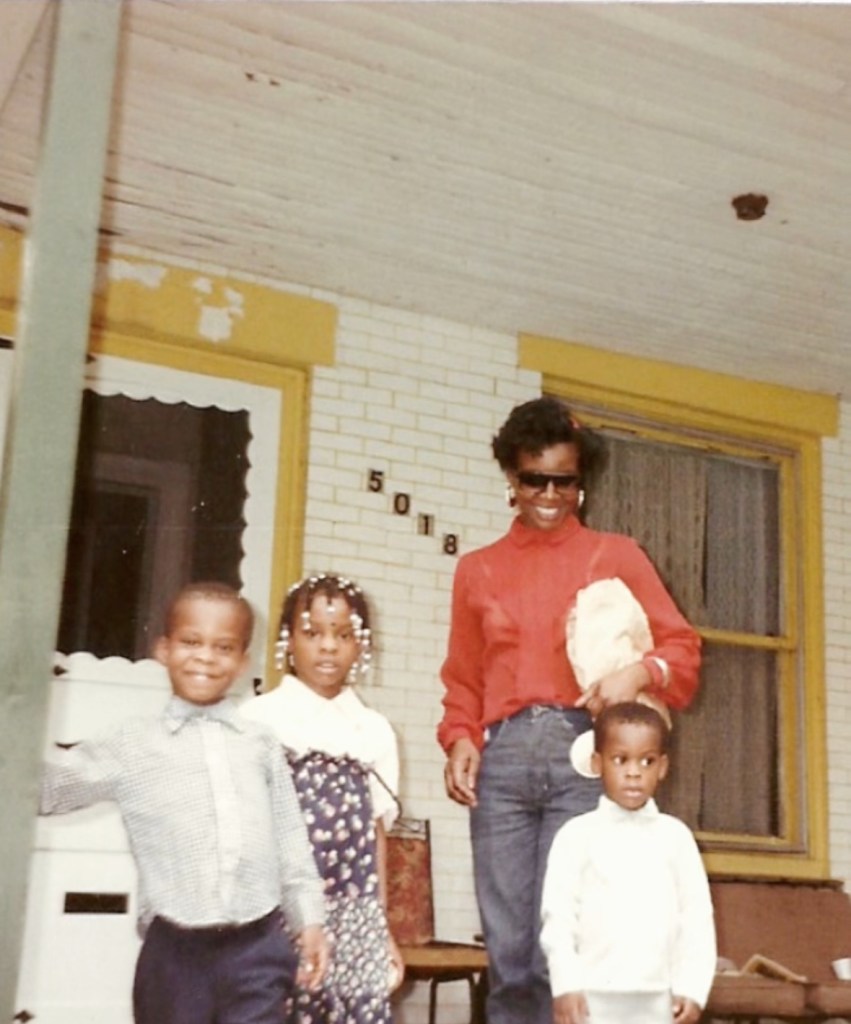
My mom, me, David, and Jeremiah at Grema Tussie house on Hazel Ave in Philadelphia, Pennsylvania, circa 1986.
✨ Created + conceptualized by Gracie Nicole Berry | CowrieConscious™ ✨
Peace, y’all. This one’s been on my spirit—it’s a long one, but it’s time to let it breathe. Thank you for bearing witness to me, and to my perspective.
I didn’t write this to romanticize suffering.
I didn’t write it to perform Black pain either.
And I damn sure didn’t write this blog to weaponize the memory of Afrika in the Black community.
Too often, our remembrance is expected to bleed—to beg, to grieve, to suffer out loud so that others can try to understand it.
But what I carry and what carried me this morning—is something ancient, something deeper, and far more whole.
This is a story born of a dream.
A blood memory.
A message not steeped in sorrow, but in truth the whole truth and nothing but the truth so help us god.
Not in what was done to us—but in what lives through us.
The Afrika I feel in my bones is not frozen in pain.
She is radiant. She is rhythm.
She is beyond resilient wrapped in spirit.
And when she visits me—my ancestors visit too…they don’t visit to mourn.
They visit to remind me.
To steady me.
To call to me.
I woke up this morning, earthside, breathing and crying from a familiar song on my heart.
Not from sadness—but from knowing.
From remembering.
Something I didn’t live through—but that lives through me.
The dream wasn’t just a dream.
My ancestors came bearing a message—a charge, a call, a confirmation.
Had to hurry up and write it down when I woke up, but they said:
“Chile of our blood, keeper of our stories,
Don’t you forget. We are more than what was done against us. We are what we’ve become in the soul of it. Tell your story, baby. Tell ‘em how it hits you. How it moves through your spine and rattles your bones.
Tell ‘em, even if they ain’t ready. Shit, they might not never be ready.”
I lay there, between snot and saltwater, whispering
thank you, thank you, thank you
over and over again.
My ancestors sweet words made my crying ritual less about pain. It was about communion—a holy remembering. Their voices fed me good like a hot pot of oatmeal in the morning, sticks to the ribs all day.
Thank you for my Afrikanface and lineage. Thank you for trusting me with our ache and our beauty.
Thank you for trusting me with our memory and our brilliance.
Because I don’t imagine my Afrikan ancestors petrified in shame.
I see you crossed over into something whole.
I see you transcendent. Not only survivors of the unconscionable horror of the Maafa—our Afrikan Holocaust—
but as the Afrikan diaspora, builders of civilizations, cultivators of language,
lovers, rich in rhythm and reason. I feel you everywhere—in the marrow of my bones,
in my blood memory that carries you in it.
And when you show up?
You don’t come to grieve.
You come to guide.
To remind me that healing flows both ways.
That the line between ancestor and descendant is not a closed gate—but a living bridge.
I know you haven’t forgotten us.
You know we still carry what you could not finish. And when the moment calls—when the ache echoes—you return.
Not in sorrow.
But in strength.
You reach through time to steady us,
to move with us,
to remind us:
We are the continuation of your story—too sacred to die.
And With Remembrance Comes Responsibility
Because while I write from a place of reverence—for our ancestors, for the truth—they also left me with a charge: to protect the memory, not just feel it. To tell it whole. To stand guard over it. And that includes challenging and checking anything that distorts or dishonors it—even when it comes from within our own community. Let’s face it, we’re a community — not a single bulging rock of Gibraltar. But that doesn’t mean we let shit slide. Accountability matters for every Black person on this planet. Being real with each other — even when it’s hard — is how we grow. It’s how we heal, not just as individuals, but across generations. Together.
Lately, I’ve noticed a growing trend in our community around narratives that, while often framed as empowering or rooted in cultural pride, dangerously distort or outright deny the historical facts of what our people endured during the Middle Passage. We can’t afford to rewrite trauma into myths or pride into denial. Honoring our ancestors means confronting the full weight of that history by facing it honestly, not reshaping it to make ourselves more comfortable. And while I know some of these ideas come from a place of wanting to reclaim identity and autonomy, we have to be honest: some of this shit is deeply harmful, historically inaccurate, and unintentionally echoes the erasure we’ve fought so long to undo.
As Black Afrikan descendants — people whose brilliance and greatness were violently interrupted by one of history’s greatest crimes against humanity — we carry the living legacy of that trauma. Our ancestors, who built civilizations and inscribed wisdom into stone before others even knew how to write, were kidnapped, trafficked, raped, and enslaved through the transatlantic slave trade. And while that chapter may be behind us, its impact is not. It still lives in our bodies, our families, and our communities today.
To twist or deny that truth doesn’t uplift us — it endangers us. It fractures our connection to each other, to our history, and to the land that is inherently ours.
There’s a growing wave of trendy narratives in our community — ones that deny our connection to Afrika. “I’m not Afrikan, I’m Carribean .” “I’m not Black, I’m colored.” “I got Indian in my blood.” The message is the same: anything but Afrikan — even when the truth is written all over our faces and carried through our bloodlines.
You may have heard versions of this: “Black people were Indigenous to the Americas.” “We didn’t come from Afrika — we were already here.”
Some of us cling to other lineages to distance ourselves from Blackness — especially Indigenous ancestry. And while many of us do have Native roots, the reality is, Black people are often excluded from those very communities. Anti-Blackness exists there too. Claiming another identity doesn’t erase the legacy of the Middle Passage or the generational impact it left behind.
And on the flip side — there’s nothing wrong with having multiple ancestries. I do. I carry European ancestry through my father’s lineage — something I’m still working to unpack and reconcile with, especially given the history attached to it. But that’s a different story for a different day. The point is, many of us have mixed heritage. That’s not the issue.
The issue is: why is it always Afrikan that gets denied? Why is that the lineage treated as taboo, as something to escape or erase? That’s not pride — that’s colonization.
Even the idea that Afrikan people on the continent mistreat Black folks from the diaspora is often exaggerated, unstudied, and weaponized. That narrative is part of a larger agenda: to keep us disconnected. Because a disconnected people are easier to control, divide, and erase.
These narratives might feel empowering, but they don’t liberate us — they fragment us. Reconnecting to our Afrikan identity is not weakness. It’s healing. It’s truth. And we owe that to ourselves — and to our ancestors
The Truth Will Set Yo Ass Free Or On Fire. It’s Sacred Like That.
Yes, there is some scholarly debate that early Afrikan explorers may have had limited contact with the Americas before European colonization. What of it even without much evidence to back it up. That’s not the threat.
The real danger is when that conversation gets distorted—twisted into claims that chattel slavery didn’t happen as we know it, or worse, that Afrikan descendants in America have no direct connection to Afrika at all.
That’s not pride.
That’s not empowerment.
That’s erasure—plain and simple.
And here’s the hard truth:
We’ve always expected false supremacists delusion to erase us.
We’ve watched European institutions systematically steal, distort, and bury the truth about Black scholars, scientists, inventors, leaders, and entire civilizations since the beginning.
That erasure is nothing new. It’s part of their playbook.
But when it comes from within our own community—when we see Black folks resharing or reshaping false narratives that disconnect us from our ancestors, from the Middle Passage, from the truth of slavery—it does something even more devastating.
It harms us twice.
Once by repeating the erasure,
and again by making it harder to heal from it.
Because when the lie comes in a familiar voice, wrapped in cultural pride or spiritual language, it’s easier to let our guard down. Easier to believe. And far harder to undo.
That’s why naming it is important.
That’s why truth-telling is sacred.
And that’s why we must honor our ancestors fully—not just with candles and cloth, but with historical clarity and accountability.
Why This Matters
This kind of historical revisionism might sound empowering on the surface, but in practice, it harms us in very real ways:
It erases our ancestors’ suffering and resistance. Pretending the Middle Passage didn’t happen, or minimizing it, dishonors the generations who endured and resisted brutal conditions so that we could exist today.
It severs our connection to Afrika. We’ve already had our languages, names, and cultures stripped away—so doubling down by disowning what remains of that connection is deeply damaging to our collective unity.
It undermines the fight for reparations. If our history is erased or rewritten, how can we demand justice for what was done?
It creates confusion that empowers oppressive systems. Muddled narratives about Black people make it easier for those wielding power to avoid accountability. And that confusion isn’t new—it’s by design.
Historical Erasure Is Political
Historical erasure isn’t passive. It’s not accidental. It’s political — and it’s been weaponized time and time again against Black people. But what’s often overlooked is that this erasure doesn’t only come from outside forces. Sometimes, it happens within our own communities. And even though the forms of erasure differ in power, in context, and in consequence, both must be named. Both must be held accountable.
False supremacy has always relied on erasure to justify itself. From textbooks that reduce slavery to a footnote, to museums filled with Afrikan artifacts stolen and displayed without context or credit — the project has always been to strip Black people of our humanity, our histories, and our contributions. And those artifacts haven’t just been inanimate objects. They’ve included real Black people — human beings treated as curiosities and exhibits. Saartjie Baartman, a Khoikhoi woman from South Afrika, was paraded and displayed across Europe in the early 19th century as a spectacle emphasizing distorted and racist ideas about her body and race, her image used to justify pseudoscientific claims of racial hierarchy. Her remains were kept in a museum for nearly two centuries before being finally returned to her homeland in 2002, where her body was laid to rest. El Negro, a young man from southern Afrika — likely Botswana or South Afrika, had his remains stolen in the 1830s by French naturalist Jules Verreaux, who taxidermied him like an animal and put him on display. Initially, his stuffed body contained his original skull and several arm and leg bones. He was exhibited in the Darder Museum of Banyoles in Catalonia, Spain. Specifically, it was exhibited in the museum’s natural history section for over a century as a colonial curiosity before his remains were returned to his home of South Afrika and given a proper burial in 2000. This is erasure by dehumanization, by objectification, by institutional violence.
An 1830 illustration by George V. T. depicting Saartjie Baartman, an enslaved woman from South Afrika, based on descriptions before photography, showing ‘steatopygia’—a trait racist science exploited to justify colonial stereotypes.Postcard from the late 1970s or early 1980s showing El Negro on display in Spain, late 20th century — a taxidermied Black man stolen from South Afrika in the 1830s. A haunting symbol of colonial violence and racial dehumanization.
Black inventors, freedom fighters, scholars, builders, and artists have all been systematically removed from the dominant historical narrative. In their place, a sanitized version of history is sold — one where white figures are centered, heroic, and civilized, and everyone else is peripheral or disposable. That kind of erasure isn’t just about ignorance — it’s about control. If you erase someone’s past, you disempower their present and limit their future. It becomes easier to criminalize Blackness when you erase its brilliance. Easier to gentrify a neighborhood when you erase who built it. Easier to justify inequity when you erase the systems that created it.
But erasure isn’t something we’re immune from doing ourselves. Within our own communities, there’s sometimes there can be a reluctance to embrace Afrika, or even a complete denial of it. A rejection of the continent as ours — whether from pain, miseducation, shame, or the psychological trauma of displacement. But when we deny that connection, we participate in a quieter kind of erasure. We erase our ancestors. We erase the rich cultural lineages that false supremacy tried to sever. We lose access to the pride, resistance, and beauty that existed long before colonialism or the transatlantic slave trade. And that too has consequences.
We can’t afford to let these forms of erasure — external or internal — go unchecked.
Yes, the violence and legacy of yt historical erasure is more systemic, more resourced, and more deliberately constructed. It’s reinforced by governments, schools, media, and cultural institutions. But that doesn’t mean we shouldn’t interrogate our own narratives too. If we want liberation, we need to recover truth — all of it.
Accountability must move in every direction. Not to shame, but to build. To rebuild. To remember who we are and where we come from — fully.
Because every time history is erased, a lie is told. And if we don’t fight those lies with truth, someone else will write a story that doesn’t include us at
When “Progress” Becomes Performative
Just like the misleading historical narratives, we also need to talk about the performative progress we see in systems claiming to support us. Take terms like Diversity, Equity, and Inclusion (D.E.I.) or Critical Race Theory (C.R.T.)—they sound dope and revolutionary on the surface. Cute-Catchy. Academic. Progressive. But who actually benefits?
Too often, these frameworks become elitist, inaccessible, and disconnected from the lived realities of everyday Black people. They’re wrapped in corporate language and filtered through institutions that continue to harm the very communities they claim to uplift.
What we really need? To call that racist shit what it is, and to hold those racist beasts accountable for the irreparable damage they continue to cause. We don’t need more buzzwords, panels, or watered-down training modules that let racist systems and their people off the hook. On the surface, it looks like progress. But honestly? Progress for who? To me it’s a band-aids on bullet wounds. Distractions. Decoys. Pretty lil’ lies dressed up in inclusion and equity with kente’ cloth on it.
From Iron Brands to Barcodes—How Corporate “Diversity” Echoes A Violent Legacy
We’ve seen this before. Y’all saw how Target played in our faces—slappin’ Blackness and queerness onto products for profit. Pan-Afrikan flags and rainbow pride put on T-shirts, mugs—you name it. That’s what I call visibility without ja plan for justice. Identity without a plan for liberation. It’s branding, exploitation with no empowerment. It’s a lack of organization and mobilization.
And speaking of branding—let’s talk about how violent that legacy really is. Back in 1710, if you encountered an enslaved Afrikan owned by the Royal African Company (RAC)—an English mercantile company chartered in 1672 to trade along the West Afrikan coast—you would witness a brutal system firsthand. The RAC held a monopoly on English trade with Afrika, initially focused on gold but later primarily involved in capturing and selling enslaved Afrikans. This company played a major role in the Transatlantic slave trade, transporting more enslaved Afrikans to the Americas than any other single institution. To mark their human property, they seared the letters ‘RAC’ into the chests of enslaved people using branding irons like the ones pictured below—similar to those used for cattle.
Branding irons once used to mark enslaved Afrikan people in the Americas.
This violent practice extended beyond the RAC. Plantation owners across the Americas adopted branding as a method of control and dehumanization. Take for instance a colonial beast named Volsey B. Marmillion from Louisiana. He and other plantation beasts like him didn’t just tax our ancestors’ heads like livestock—they branded them like livestock, too. Literally. They burned their initials, family crests, and imperial symbols into Black flesh like a cattle’s raw hide. Marmillion branded his initials—VBM—into the forehead of an enslaved Afrikan man he owned name Wilson Chinn, to mark ownership over him. A human being, reduced. Branded like cattle. Treated like cargo.
Wilson Chinn, a Branded enslaved Afrikan man in Louisiana, 1863
That wasn’t just ownership.
That was complete annihilation.
Barbarism.
Unconscionable.
A crime against humanity so vile, that I will always hate them, that I will always wish for them to be shot in the morning for betraying my people. I digress.
We Are Not Just Descendants of Pain—We Are Architects of Power
We carry their knowing. Their fire. Our people are the mathematicians of Timbuktu. The master builders of Kush and Kemet. Like I said earlier, we carved stories into stone before others learned to write. We mapped the stars while empires crawled and crumbled. We are scholars. Scientists. Griots. Birthing experts of the world’s most sacred knowledge. Black genius didn’t begin in struggle—it was interrupted by it. To be Black is to be a vessel of ancient intelligence. To be Black is to be a living archive of sacred, intellectual, artistic, and spiritual wealth.
Our creativity is our resistance. Our joy is our protest. Our memory is our legacy.
Truth Is Our Sheild—Not Just Against Lies, But Against Forgetting
Black people have always resisted—even if you’ve got Kanye Wests claiming we didn’t, even saying Harriet Tubman never existed, as if he was there beside her in the fight. That kind of revisionist talk isn’t just false—it’s betrayal.
One of my poems, from my first solo collection I’m working on, answers that. It traces how we’ve resisted—spiritually, physically, culturally—since the moment of capture. It doesn’t just remember the truth. It proves it with facts. Resistance is in our blood, our breath, our bones. We’ve always resisted and loved in the catastrophe of it. Created too. Reimagined. Taught. Reclaimed. We are here because they endured.
The Maafa is not the whole story—but it is part of the truth we refuse to let die. False theories that erase the transatlantic slave trade don’t just erase our pain. They erase our resilience. They erase our power to transform tragedy into art, to spin suffering into sovereignty. These stories rob us of our full inheritance—one paid for in blood, yes, but also in brilliance.
We Are Not Just the Wounded—We Are the Healers
It’s easy to forget that we birthed civilization itself. That Afrika is not just the cradle of life—but the creature of mathematics, astronomy, philosophy, literature, law-you name it. We, the descendants of the Afrikan Holocaust, are also the descendants of creators. We’ve birthed so much life—spiritually, culturally, artistically—that it literally informs the entire planet. That’s why I always say: our steez is a spiritual. We are not only the hurt—we are the healers. We are the chain breakers. We are the restorers, the rememberers, the revolution that is now televised.
We stay in the struggle not just for historical accuracy—but for spiritual integrity. We are more than suffering. More than trauma. We are sacred. We are scholars. We are sovereign. And this is why false pride and supremacy can’t build their own tables, they have to steel yours. Folks don’t get to remix our grief for clout. Don’t get to delete the names of stolen Afrikans just ‘cause the truth will burn them alive. Reparations aren’t optional. Justice is not theoretical. The restoration of Black dignity begins with the telling of the full story. And we must tell the whole truth and nothing but the truth so help us god.
Reclaiming Our Story Is Reclaiming Our Power
We must uplift the voices of scholars who center Afrikan truth—not those who flatten or erase it. If you can’t decolonize it, burn that shit to the ground—books and all.
All the divine doulas, barbers giving fades and mentorships, street corner griots pushin’ pen to paper, freedom singers, hood therapists holdin’ group sessions at the corner store. We are still pouring libation and practicing liberation—on buses, in boardrooms, behind registers, drum circles, in pulpits, at protests, in prisons, in prayer—even the brotha without a home, walking back-and-forth from the street to the sidewalk, whispering to his ancestors. What some call madness, we recognize as masked medicine—a spiritual gift misread by a world that’s forgotten how to listen. He’s not lost; he’s in ceremony. A living altar between realms. So leave that man the hell alone.
Black excellence is not void.
It’s the shadow.
It’s ancestral.
What We Must Do Is Use Our Collective Memories to Heal Now
Again, the Afrikan Holocaust is not the beginning of our story—it was a brutal interruption. But it could never erase us.
We are not ghosts of stolen people—we are here, writing blogs and singing our songs, guardians, a living legacy. So when I use the popular phrase, Put some respect on our names—I don’t just mean respect our pain. I mean…
Put respect on our power.
Put respect on our breath.
Put respect on our possibility. Put respect on our contributions,
Put respect on our compassion,
Put respect on our clarity,
Put respect on our cosmic knowing.
Because we’re here—in living color, building every dream we want. Master teachers and master students. Creating more life. Restoring to wholeness what was once fragmented. Thriving in the face of every force designed to erase us.
And with that respect comes deep responsibility. As individuals, we must:
Speak the truth, even when it’s uncomfortable.
Honor our ancestors by preserving their stories, not rewriting them.
Support reparations, both legislative (like H.R. 40) and grassroots.
Challenge misinformation, especially online.
Reclaim Afrika, not as a distant myth, but as an integral part of our identity, our source, our center, our home.
Healing From Our Collective Memory—and Why Reparations Matter: My Final Peace
The trauma of the Middle Passage and the Maafa isn’t a myth or some distant history lesson—it’s on record, a living wound in our collective memory. It runs deep in our bones, in our soul, in the stories passed down from generation to generation. Healing from that kind of pain can’t happen when we keep pretending it didn’t happen or when we allow false narratives to cloud the truth of our people.
This trauma is real, and it’s not just in the past. It shows up today as what Dr. Joy DeGruycalls Post Traumatic Slave Syndrome (PTSS)—the deep, generational trauma passed down from centuries of brutal oppression. PTSS helps explain some of the violence and dysfunction in Black communities—not as an excuse, but as a starting point to understand why healing is so critical.
When we see cycles of violence or struggle in our neighborhoods, it’s not because of that’s who we are—it’s because of what we’ve been forced to carry for hundreds of years. The pain of being stolen, dehumanized, and disconnected from our roots still echoes today. But knowing this isn’t about blaming—it’s about breaking the cycle. It’s about starting the real work of healing together.
And that healing requires more than words; it requires tangible action-Reparations. Reparations aren’t just about money or politics—they’re about restoring rightful order. Returning what was stolen: our dignity, culture, history, and place in the world. True reparations begin with truth—no sugarcoating, no denial. Because healing starts with honesty.
It doesn’t matter that yt people today may not know exactly which of their ancestors committed these atrocities, or that they themselves didn’t directly participate or have no responsibility in it at all—the reality is one of us exists as descendants of those whose ancestors inflicted grave and lasting harm, and descendants on the other side who are still recovering from that damage. Afrikans born in America live alongside people whose last names were forced on them—names that carry the weight of stolen identity—further immersing us in this cesspool of inherited trauma and injustice.
Meanwhile, Black people have yet to receive the full reckoning, apology, or reparations that other groups—like First Nations peoples, who have secured land rights and formal apologies for colonization; Holocaust survivors, who received reparations from Germany for genocide; Australian stolen children, who were officially acknowledged and compensated for forced removals; and displaced Chinese Americans, who received a formal apology and reparations for the Chinese Exclusion Act—have been granted, often gleefully with “cherries on top.”
Reparations aren’t just about money or politics—they’re about restoring rightful order. Reparations are a real, material commitment to righting historical wrongs—not just symbolic words. They turn talk of justice into action, revealing where a nation’s values—and heart—truly lie. You can’t claim to care about justice without investing in the repair of the people harmed. Words may acknowledge the pain, but reparations put your money where your mouth is. Real care requires real commitment—because dignity, responsibility, and love demand more than cheap talk.
When we say “Black Afrikans were stolen—and must be restored,” we’re speaking of more than survival. We mean reclaiming the power to thrive—physically, financially, spiritually, and culturally. It’s about repairing our roots, healing our lineage, and moving forward whole.
Our ancestors fought for us to be here—not just alive, but alive with purpose, creativity, and strength. Reparations are a way to honor that fight by investing in our communities, preserving our stories, and rebuilding what centuries of oppression tries to destroy.
Healing isn’t just an individual thing—it’s collective. It’s about all of us, together, facing the full story. When the truth about the Middle Passage is denied or erased, it stops the healing. It keeps the wound open, the trauma alive. That’s why reparations are more than a policy—they’re a pathway to collective freedom. We don’t need charity or pity. We need justice and restoration. And we won’t stop demanding it—not for guilt, but because it’s right and necessary for us to heal and reclaim our future.
So yeah, telling the whole truth and nothing but the truth so help us god—even the parts that might stop some hearts—is how we honor our ancestors, respect our present, and protect our future. Because sometimes, to be truly reborn, we gotta face the most visceral truths to set out souls free.
The history of a people can’t be eradicated.
Black people were there. Black people are here. Black people are in the future.
I was off work today, feeling a little under the weather, so I decided to curl up on the couch to rest and watch a movie or two. I came across The Woman in the Yard — a relatively new horror film that came out this year starring Danielle Deadwyler. For me, it was so much more than a horror story; it felt like an unexpected bridge between Afrofuturism and shadow work. It reminded me of how Black Gothic stories, like Toni Morrison’s Beloved, use ancestors and the supernatural to help us face buried grief and generational trauma.
The Woman in the Yard definitely had me on the edge of my couch with sweaty palms and my heart racing from all the suspense and that sense of the unknown you find in ghost or horror films — but it was so much more than your average haunting.
Image source from Knotfest
For me, it taps into Afrikanfuturism — not in the shiny sci-fi way of Black Panther or Nnedi Okorafor’s worlds, but through that deeper aesthetic and philosophical lens that uses the speculative, surreal, and supernatural to reframe Black existence and liberation. The entity in Ramona’s yard mirrors how some Afrofuturist stories use ghosts, shapeshifters, or spirits to embody the psychic residue of history.
That figure feels like Ramona’s actual shadow work — all her grief, guilt, pain, and generational trauma begging to be witnessed. The haunting made me think about how, for us, facing our shadows is how we envision a freer future. The yard feels like a kind of portal — so if Ramona can confront what’s haunting her, maybe her babies won’t inherit those same spirits.
That’s what Afrofuturism means to me — not just sci-fi or outer space, but the courage to reimagine healing and dream beyond our wounds. To find solace in our shadows. To use the supernatural to probe the psychological aftershocks of grief and oppression, pushing Black stories beyond realism — which, to me, is deeply Afrofuturist.
Definitely give the movie a try if you haven’t seen it.
Finally made it down to a local creek earlier this evening to offer our Ase’ Ancestor Affirmations from my exhibit Shadowkeepers & Roothealers the Original OG’s, that was on view at The Ware Center-Millersville. We uplift the spirits of Olokun, Osun, Yemaya and all of the water Orisha I haven’t discovered yet.
I was literally chasing waterfalls yall lol! I wanted to be intentional about the final resting place of the affirmations, so I took time searching here and there. Initially, I thought to go down to my favorite watering hole, but that too didn’t quite feel right. I envisioned the affirmations being whisked away into moving water, rushing water. I asked my ancestors for guidance because nothing was resonating in my immediate environment. I went from one idea to the next when suddenly I saw something about water falls and dams in PA. A beautiful light bulb shined over my head, thats when the journey began to find a local spot that had a waterfall or stream of moving water. I kept finding places that were in PA, but over 200 miles away from Lancaster. I thought there has to be something closer to my area. I kept talking to my ancestors about the dilemma and urged them to help me. Plus, I was trying to get things done while the moon still waned because it (conjures to reverse, releases old habits and is good for reflection and divination) exactly what I was trying to do. Finally, I came across Mill Creek Falls which is about 20 miles outside of Lancaster, a 30 minute drive. I was SO HAPPY THAT MY ANCESTORS PROVIDED SUCH QUICK GUIDANCE. Also, I couldn’t help but to notice that the name Mill Creek is also the name of a section in Philadelphia where I spent some of my younger years. Also, my aunt Neece and uncle John raised their family there too. The discovery was like double confirmation that my thoughts were heard. I knew then that I was headed in the right direction.
I drove the 30 plus minutes through rural country, not many people were around. As I turned down McCalls Ferry Rd and began a 7 mile ascension into the falls. I felt an energetic shift as if I was time traveling or entering sacred ground. I wasn’t afraid but filled with excitement. As I approached my destination about a mile out, I saw the longest bridge in the area ever. It almost seemed to slope down, creating steep hills on both sides. It reminded me of a roller coaster and I wasn’t too pleased about that lol! As I got closer, the view from all angles took my breath away. My gaze was steady tho because I didn’t want no problems with the Susquehanna River below lol! After exiting the bridge, I drove back a lonely stretch of dirt road. I parked where I saw signs for the Mason Dixon Trail which is where I wanted to go according to visitors that wrote about their experiences. I took a deep breath and recorded myself walking into the wooded area. I asked for protection as I ventured in even further. It was hot as giraffe nuts and sticky. I walked about 20 minutes before happening upon the sweet spot, creek you see in the video. However, I was looking for the 12 foot waterfall that was apparently near by. I left that sweet little creek to continue exploring the vast area. I found a cool, well preserved canal called, Lock # 12 that has historic ties to the area.
Me exploring Lock 12 a well preserved Canal
It was one hot ass journey lol! All of the sudden, right after exploring the canal, I decided to keep following the sounds of the water. I got a little nervous for my safety for a brief moment when I encountered a large group of about 25 white folks that looked more like a mob. They didn’t look happy to see me as they were walking towards me on the same bridge I was crossing in the opposite direction. If looks could kill, I’d be dead. Some of them wore racist symbols on their t-shirts like the confederate flag, some had shiny, pink skinned heads, some had goth gear, heavy eye make up and purple lipstick (I liked actually liked the goths style look lol), some had spikes and motorcycle books on that stamped across the bridge LOUD as they stamped over the narrow, creaky bridge, some were young, some were old, some were female, some were male, one of the older men in the back said “howdy” and I said it back, the other said “hi” and I said it back, some just starred as if I had 3 heads lol! But despite how physically uncomfortable I felt on the inside, I forged ahead on the outside, starring back with strong stance and stride because I knew it was my birth right to be there too. Plus, I know that my ancestors don’t play about me, and ain’t bring me this far to meet no fatal demise at the hands of no patriotic white folks. I know I’m protected and knew I was then. I was on a mission and my ancestors saw me through, providing many lessons along the way.
I give thanks to my ancestors for having my back, for helping me come down (like Ma Bendu say’s). They kept me safe and soothed the very tiny spark of fear and uncertainty that passed through my head right out through the bottom of my shoes. They helped me to remember who I am and from what spiritual lineage I come from. They helped me to look to my families bones my West Afrikan, Choctaw and Cherokee ancestors that are alive in my very backbone. Also, I couldn’t help, but think of the horror my ancestors must’ve faced at angry white vigilante mobs out to intentionally kill them, but thats a whole other blog. I give thanks to all of them. I give thanks having been born in this skin, during these days and time. Ase’O!
Deepest gratitude to the Orisha that walk with me too like Esu’ for keeping our messages safe and for clearing the path for me to do the important spirit filled work I drove all that way and intended to do. Blessings to every soul and their 10,000 plus ancestors that took a moment to witness a very special body of work for me that lead to this final phase of my work. A body of work and perspective that goes beyond the paint.
Also, want to acknowledge the Afro-Cuban family and their ancestors for adding to the deeply spiritual backdrop as they played Afrikan drums LOUD the moment I began my water offering. That showed me in the flesh right then and there how divinely guided this thang is and that there are layers and nothing can stop power of it. I mean it was as tranquil as nature could be the whole time I foraged around from (birds, streams, water trickling over rocks, insects and other critters scurrying along). The drums were a call and response to something unseen and reaffirmed that my journey was not in vain. My ancestors showed up right on time. It was a pleasant surprise and gave me all the courage I needed in my bones that moment to keep going, to keep wading in the water.
Bayo Akomolafe reminds us that, “We like water are homeless.” Because water as he describes it, in its entanglement, its fluidity, its porousness, serves as an invitation to deconstruct oneself over and over again, to shape shift. Think about the oneness that takes place between the mortal and immortal in the pouring of ancestral libation. And how it’s not simply to remember our ancestors, but is a way to reconfigure ourselves and our members over and over.
To the 62 people including myself that left Ase’ Affirmations to our ancestors in that bowl, know that your ancestors got your messages long before this moment, I just ushered them out into the universe from an Ifa perspective. Y’all dope! Enjoy this very spontaneous live. Through muffled sounds of my phone speakers going under water you can still hear and feel my vibration through humble grace. I did the best I could being alone out there, so trusting you’ll be encouraged and uplifted in all the ways there is. After walking aimlessly for hours and miles and miles of terrain, I found this beautiful clearing and creek. A home to our most precious Affirmations and notes of gratitude to our ancestors.
Ancestors are everywhere and in everything that existed before we were born, just look to the bones. Our bones symbolize truth and wisdom for the memories they hold. Our ancestors can be through blood, those we choose, those we know by name and don’t, spirits in nature, earth, moon, sun, stars as well as people in the lineage of our spiritual practice like the Orisha of the Ifa’ faith, ancestors etc,. My bones tell stories of ancient Afrikan civilizations with Ifa’ aka Yoruba feeling the most like home. What story is in your bones? How deeply do you know yourself beyond the human experience?
Out in the ‘tranquil’ protected by my ancestors and nem.
THANKS FOR ASKING
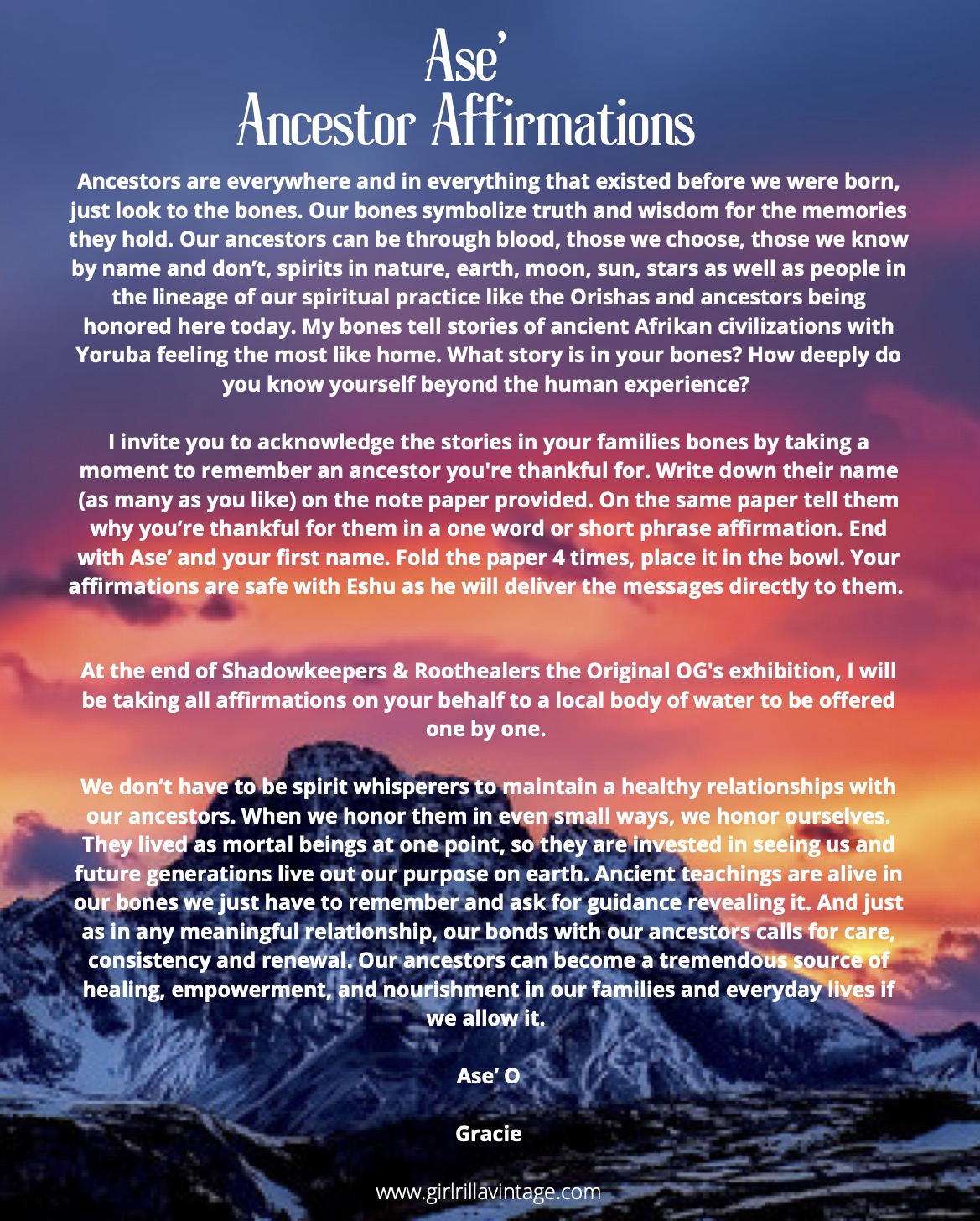
I created, Ase’ Ancestor Affirmations to serve as an invitation to engage community members and to act as a conduit to the unspoken parts of self as well as a space to honor and acknowledge ancestors from an Ifa perspective through writing on paper. Ase’ Affirmations also serves a places of healthy and transformative communication with yourself as well as between the mortal and spiritual worlds. Ase’O!
Ase’ Ancestral Affirmation Instructions that were on display at the Shadowkeepers & Roothealers Exhibit at The Ware Center-Millersville back in June 2022.
A GRAND EXIT
Remember earlier when I mentioned the Afrika drums that played the instant I started speaking about the affirmations? It can literally be heard during my LIVE video. Well, music is the gift that truly keeps on giving. After finishing the last of the affirmation offerings, I emerged from the trees transformed. And couldn’t help notice what sounded like a celebration, festival, something grand happening out in those backwoods. As I approached a clearing to get to my car, I see an Afro-Cuban family having a cookout. There was lots of food, children running about and most memorable the music. They played bachata so loud back there that I thought it was a concert or something lol! I was so relieved to see their flag and their freedom, carefree in the deep of nature enjoying themselves. As I got closer to my car, I finally witnessed where the source of the sound was coming from from as far back as the Afrikan drums I heard earlier. There were multiple speakers on top of his vehicle, so loud that it vibrated my solar plexus and I could feel hot air coming from them at every baseline. It looked like they were shooting a video out in the parking lot. I could tell no one lived remotely near by because they were having a ball with not a care in the world. The vibe was lit. The whole experience made my day! Watch me emerge from the woods in the video below. And to think I was a little nervous earlier.
We don’t have to be spirit whisperers to maintain a healthy relationships with our ancestors. When we honor them in even small ways, we honor ourselves and all connected to us. Ancient teachings are alive in our bones we just have to remember and ask for guidance to reveal it. And just as in any meaningful relationship, our bonds with our ancestors calls for care, consistency and renewal. Our ancestors can become a tremendous source of healing, empowerment, and nourishment in our families and everyday lives if we allow it.
Deep belly breaths… meditation has always served me from a place of awareness. Like leaving the thoughts in my mind instead of trying to push them out. Or paying attention to where the thoughts go to inside my body. Like what thoughts invite more peace and smoother breaths and what does it feel like. I use movement and breath like that to commandeer a mindful state that tells a story. As creatives we are inundated with so much damn information all of the time, so we have to be intentional about sifting through the garbage to get to the Jewels.
Over the weekend, I found a bracelet with my sister‘s name on it at a rural thrift shop far away from the big city where we’re from. I had actually gone back to get something for an art project when I came across the bracelet. There was no reason on earth that I should’ve ever found a bracelet with her name on it at that location, place and time. It was confirmation that were conn no matter how far apart. Also of a truth I had known all along. It’s wild how divinely guided both my art and life path is. How ancestors and spirit confirms and reaffirms every time. My sister and I share the same father, so we didn’t grow up together. In fact, I don’t even know if the spelling on the bracelet is the correct one, but I know its her name. Gives me joy to say it aloud. I haven’t seen her since 2007, after a painful truth, not mine to tell, came out about her and our father. Made me weep for my sister, but proud of the courage she was born with.
Movement is one of the many ways I work in this life to heal my families lineage in the next because I truly believe we can’t just honor ancestors and those to come simply with words, but we have to honor them in our actions, the ways we live out our lives, the ways we change traumatic, unhealthy patterns in our structure once normalized. When I push, pull, bend, flex, stomp it’s a cosmic wave of energy that does something for them too. This movement is my sister Maisha for her courage and innocence lost…
Bracelet I found with my sisters name on it
Honest to God, I just wrote my dad who is in prison, explaining to him many things, but mainly that we can’t continue to shrink into or behind shame and guilt. We can’t shrink because the pain can grow us if we let it. We can no longer hold ourselves hostage for bad choices we made or hide behind distorted mindsets and actions either. We have to do the work that will allow ourselves to be eternally free beyond this body, beyond this earth. Because the truth will set us free or on fire.
Dat smack woulda cost me my freedom. Wouldn’ta been funny if it were you or you or me. Woulda been no excuses. No protection. Woulda been the end of the world as we know it. Woulda perpetuated generational trauma. Woulda slapped cuffs on wrists like barbed wire. Woulda weighed me down in the wata like dem kluckas did Emit. Woulda lit me on fire while still breathing. Woulda knocked my teeth out cold. Woulda stuffed me inside undersized cell blocks. Woulda had me behind barz and guilty, behind barz with no pity, behind barz and awaiting trial, behind barz wishing on a stall, behind barz and chanting sad, sad, same songz of freedom #freemyniggaGrace
Dat smack reeked of privilege. Dat smack woulda took my dignity. Woulda took my livelihood. Woulda got me lynched where I stood.
Dat smack exposed a bloody nerve. Dat smack showed that we all just babies learning to crawl. Dat smack was deafening like our ancestors wildest screams as their bodies muffled the sounds before hitting the ocean floor. Or the haunting splash of salt wata up against the sides of those wretched ships carrying precious Black cargo-precious Black carnage.
Dat smack caused blunt forced trauma to my innards. Cut me deep to my heart so sad and swift. Suffocated me like a hot wind.
And fuck you if you say that smack made ALL BLACK PEOPLE LOOK BAD. We are a community not a cult. That smack revealed a painful truth we all done had. Showed, there’s more ways to grow than just one. Almost got wrapped up in the hype. Called on my ancestors for a lil heart to heart-a lil Black light. They reminded me of the powers in my lineage-Girl Real With Her Vintage. Me being one of the matriarchs to start healing thang. They say, “Tend to yo wounds. Heal the lows, vibrate through the noise cause ain’t no recoverin’ from bleeding to death.” —TheeAmazingGrace
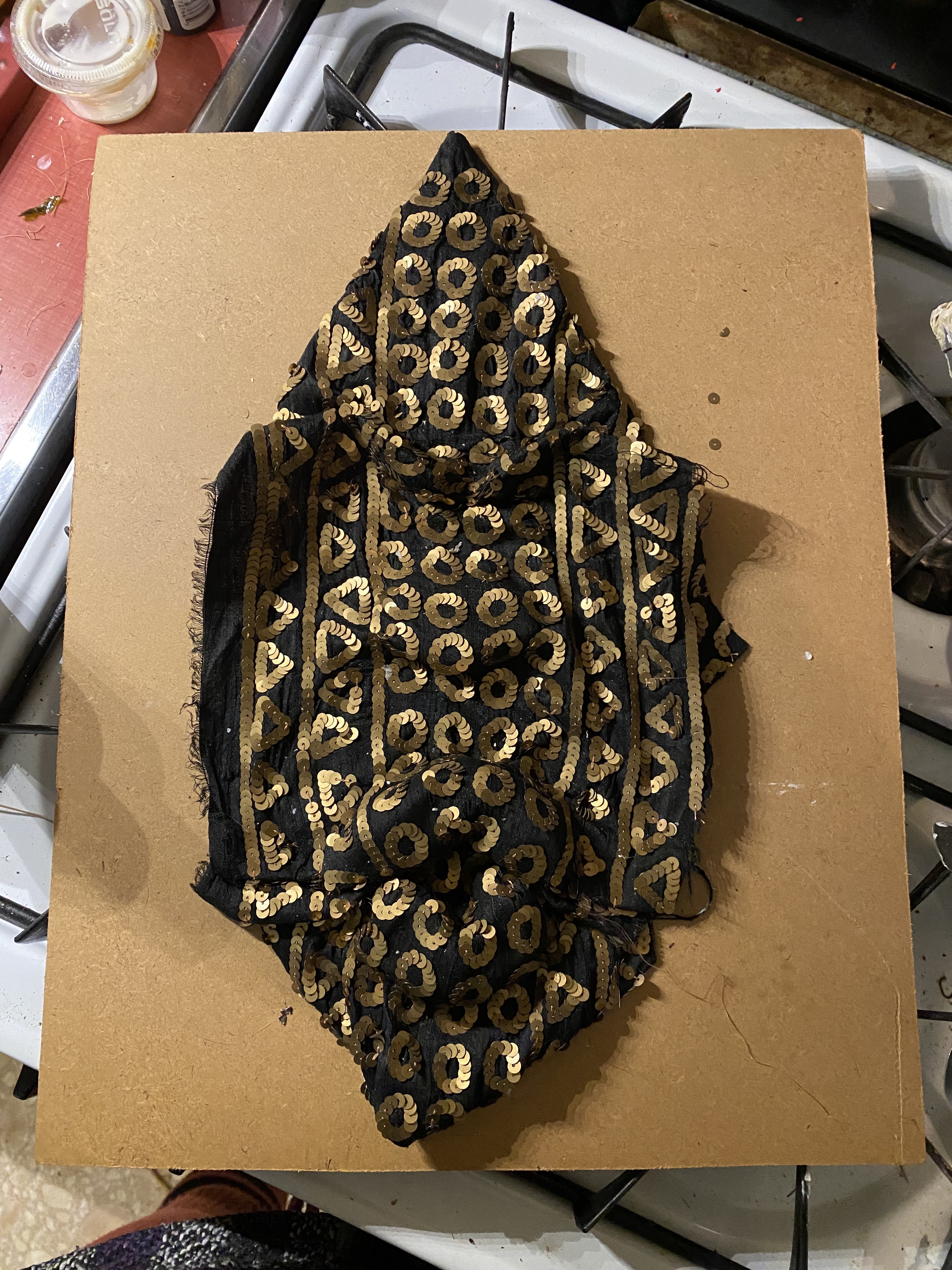
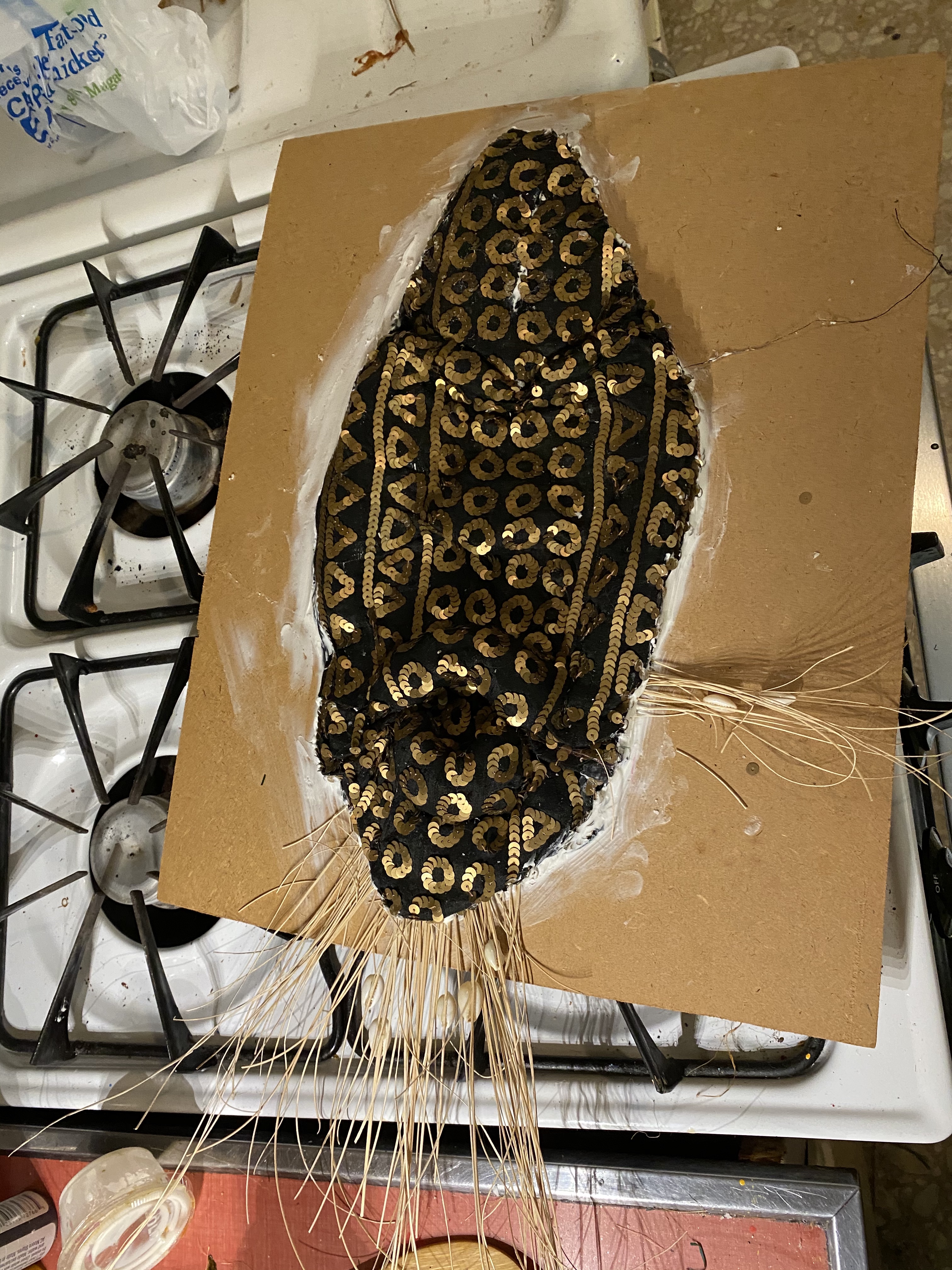
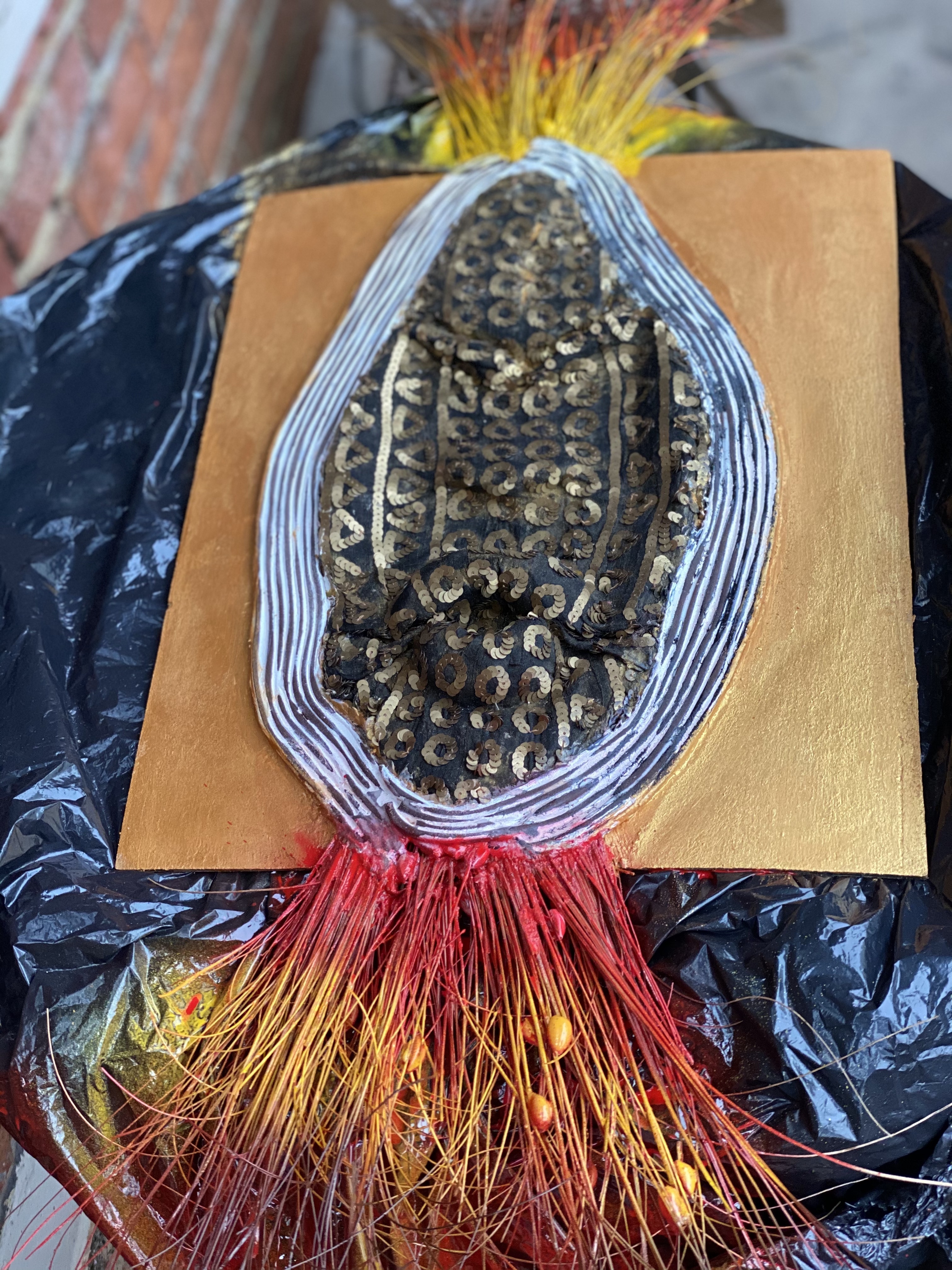
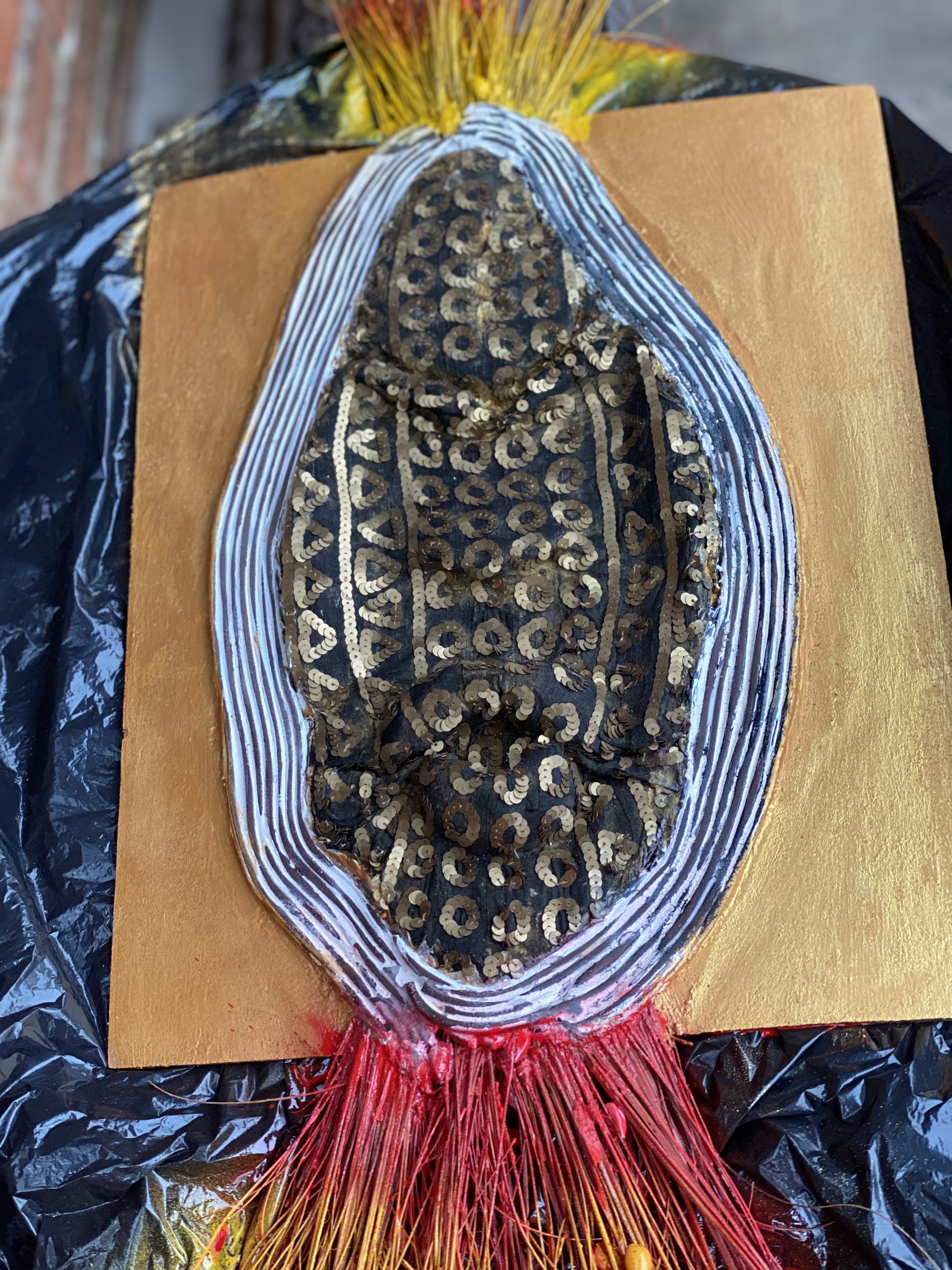
Moko Jumbie for the codes in his fabric are one of protection, life lessons, cautionary tales and superstitions prevalent in the American South. It’s the 5th mask I made in the Antebellum Tribal Afrikanface Collection. I feel like my art instinctively connects to my past and to my loved ones. Moko Jumbies are stilt walkers. Moko means healer from central Afrika and Jumbie means ghost/spirit from the West Indies that may have come from the Kongo language word zumbi. Moko is also said to be a Yoruba Orisha God of retribution. Moko Jumbies are also thought to have come from West Afrikan tradition brought to the south by those in the Caribbean.
This mask is likely my favorite because it resonates with the energy and spirit of my ancestor and brother David Berry. I feel the same energy of protection, sacredness and timelessness. A presence strong, bold and statuesque just like my brother was in this life and most certainly is an ancestor in ethers. Check out my process in the images below. Now on view @pavaagallery.










 GirlrillaVintage the Blog